
Here's a question.
If you and your best friend started a business, became family, made a fortune, built a national fashion label and spent the next few decades working together, would you still be speaking?
Sana Hashwani and Safinaz Muneer are.
Which, frankly, might be their most impressive achievement.
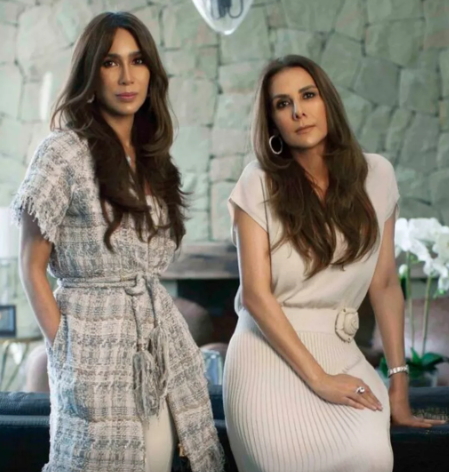
In 2011, the two designers were asked which part of their business they would keep if they could save only one.
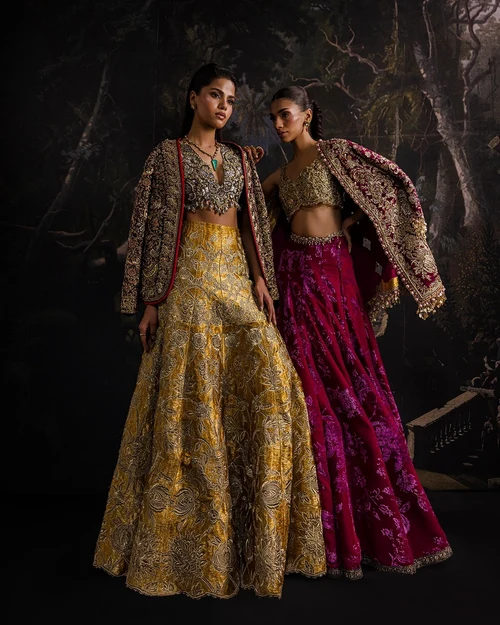
Sana chose bridalwear.
Safinaz chose lawn.
Same company. Same interview. Completely different answers.
And yet, the partnership survived.
Perhaps that's the secret. They never needed to become the same person to build the same business.
Apparently, Working Was Something to Be Pitied
Let's rewind to 1989.
Pakistan's designer fashion industry was a very different place. The enormous retail networks, celebrity campaigns and carefully choreographed lawn launches we recognise today were still years away.
Sana and Safinaz were young, married and from comfortable backgrounds.
They decided to work.
Not everyone thought this was a good thing.
In a 2015 interview with Aurora, Sana recalled that people actually felt sorry for them.
Imagine that.
Two women decide to build a business, and the reaction is essentially, "Oh dear, things must be difficult at home."
They started small, with a few tailors and a shared interest in fashion.
No nationwide retail strategy. No elaborate brand manifesto. No grand announcement about revolutionising Pakistani clothing.
Just two women making clothes people wanted to buy.
Sometimes the best businesses begin without anyone making a speech about changing the world.
Friends, Family and Finances. What Could Possibly Go Wrong?
There's another detail worth knowing.
Safinaz married Sana's brother.
So these weren't simply two designers sharing a studio. They were friends, business partners and sisters-in-law.
Anyone familiar with South Asian family dynamics will appreciate just how ambitious that arrangement sounds.
Family disagreements are complicated enough when the subject is who's hosting Eid.
Now add employees, customers, collections, money and two creative personalities.
Yet the partnership has lasted.
The founders have spoken about friendship, trust and giving each other creative freedom.
That last part is particularly interesting.
Because when two people build something together, the temptation is to agree on everything, approve everything and eventually drive each other mad.
Sana and Safinaz appear to have understood something rather useful.
You can share a business without sharing every opinion.
“Perhaps the secret to a successful partnership isn't agreeing on everything. It's knowing which disagreements aren't worth having.”
One Wanted Bridal. The Other Wanted Lawn.
Remember those different answers from 2011?
They're worth revisiting.
Bridalwear and lawn represent two very different worlds.
Bridalwear is personal. Emotional. Expensive. A single outfit can involve weeks of work, countless details and a customer who has probably been imagining her wedding clothes since childhood.
Lawn is another universe.
Seasonal collections. Production volumes. Thousands of customers. And the annual Pakistani summer ritual of women examining prints as though they're assessing evidence in a criminal investigation.
Both are fashion.
But they demand very different instincts.
Sana Safinaz managed to operate in both markets.
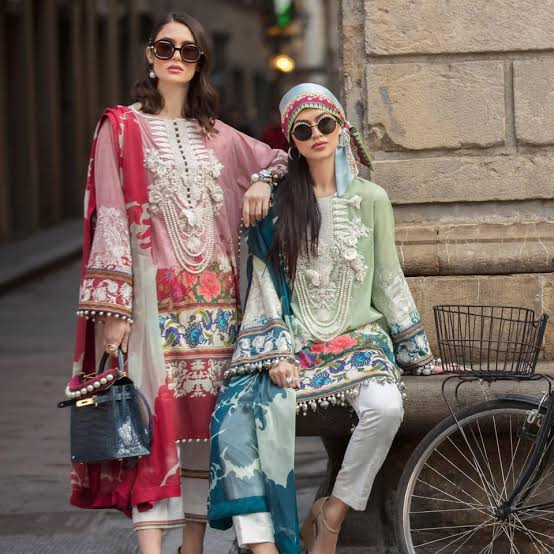
The brand became part of the designer lawn phenomenon that changed how Pakistani women shopped for summer clothing.
Suddenly, lawn wasn't simply fabric for everyday suits.
It came with campaigns, embroidered panels, elaborate dupattas and the sort of anticipation previously reserved for much bigger occasions.
And naturally, once everyone realised there was money to be made, the entire industry wanted in.
Designer lawn became an increasingly crowded business.
The very market that helped expand Sana Safinaz also made it harder to stand out.
That's the trouble with starting a trend.
Eventually, you have to compete with everyone following it.
The Business Got Bigger Than the Designers
Here's something we particularly appreciate about their story.
They've admitted they didn't know everything.
As Sana Safinaz expanded into retail, the business became considerably more complicated.
Designing beautiful clothes is one skill.
Running stores, managing inventory, hiring teams and keeping customers happy across multiple locations is something else entirely.
In their 2015 Aurora interview, the founders discussed the need for professional management.
Which sounds obvious until you remember how many founder-led businesses struggle to accept it.
There's a particular kind of entrepreneur who believes nobody can do anything properly unless they're personally supervising it.
That works wonderfully until the company becomes too big for one person's diary.
Sana and Safinaz recognised that their business needed expertise beyond their own.
It wasn't an admission of failure.
It was an acknowledgement that the company had grown up.
“Being brilliant at designing clothes doesn't automatically make you brilliant at running a retail operation. Knowing the difference is rather important.”
The Awkward Business of Being Copied
Of course, becoming a successful designer comes with a familiar Pakistani fashion problem.
Someone, somewhere, is probably making something that looks suspiciously like your latest collection.
The founders have discussed design copying in interviews.
And they're right to take it seriously.
Original artwork, embroidery development, sampling and campaign production cost money.
Copying the finished result is considerably cheaper.
But here's where things get interesting.
Fashion itself is built on references.
Designers borrow from architecture, history, art, traditional textiles and cultural influences. Inspiration is part of the creative process.
So where does inspiration end and imitation begin?
It's a question the industry doesn't always answer consistently.
For customers, there's another question.
If a similar-looking outfit is available elsewhere for substantially less, what makes the original worth buying?
Better fabric? Superior finishing? More reliable quality?
Those are perfectly good answers.
A designer label alone is not.
And that's a challenge for every established fashion house, not just Sana Safinaz.
Can Sana Safinaz Exist Without Sana and Safinaz?
Now for the question that interests us most.
What happens when the founders eventually step away?
A fashion house built around two names has a rather obvious problem.
Those names belong to actual people.
People who may eventually want fewer meetings, fewer collection deadlines and considerably more holidays.
The founders have discussed succession and the importance of bringing professional management into the company.
By 2023, CEO Uzma Munaf was publicly discussing the business's retail strategy and expansion.
That tells us something important.
Sana Safinaz has been working towards becoming an institution rather than remaining entirely dependent on its founders.
But there's a difference between having professional management and successfully transferring a creative identity.
Customers can become attached to the people behind a label.
Remove those people, and the name may remain while the magic quietly disappears.
Other fashion houses around the world have faced the same challenge.
Some reinvent themselves.
Others become very expensive exercises in nostalgia.
Which direction Sana Safinaz eventually takes remains an open question.
From Being Pitied to Being Honoured
In March 2025, Sana Hashwani and Safinaz Muneer received the Sitara-i-Imtiaz.
Think about that for a moment.
Two women who began working when people apparently felt sorry for them were now being recognised nationally for their contributions.
There's something rather satisfying about that journey.
Not because every collection they've produced deserves applause.
Not because commercial success automatically makes someone a visionary.
But because they helped establish fashion as a serious business in Pakistan at a time when the industry was still finding its feet.
They built careers, created opportunities and demonstrated that women could run substantial businesses without waiting for someone else's permission.
And they did it together.
The MK Verdict
We're not going to pretend Sana Safinaz has reinvented fashion with every collection.
No designer has.
Some designs will be memorable. Others will be perfectly pleasant. A few will inevitably make you wonder whether the creative team was having a particularly uninspired Tuesday.
That's fashion.
But the story of Sana and Safinaz deserves attention for reasons that have very little to do with the latest lawn catalogue.
Two women started a business in 1989.
They were friends. They became family. They had different creative preferences. They entered new markets, expanded into retail and learned that running a fashion empire required more than knowing how to design clothes.
And through it all, they remained partners.
In an industry famous for individual personalities, they've built something that belongs to both of them.
“The clothes made Sana Safinaz famous. The partnership made it last.”